

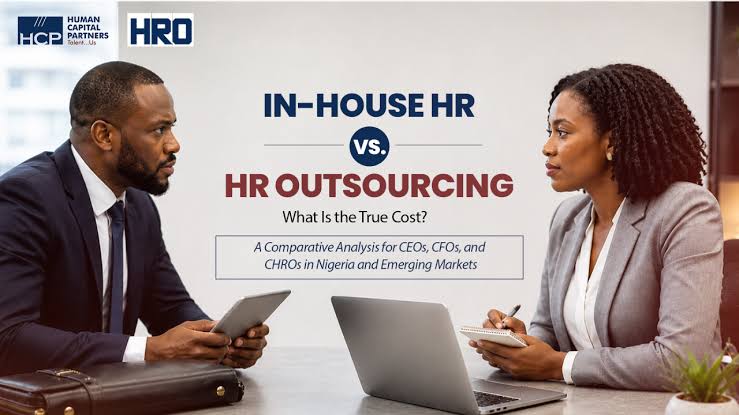
Growing a business comes with exciting opportunities, but it also introduces new responsibilities. Managing recruitment, employee relations, compliance, payroll coordination, and workplace policies can quickly become overwhelming without dedicated human resources support. At some point, every business faces the same question: is it more cost effective to hire an internal HR professional or partner with an external provider?
The answer depends on more than salary alone. Businesses must consider recruitment costs, ongoing training, technology, compliance requirements, and the flexibility needed to support future growth.
Understanding the Cost of an In House HR Employee
Hiring an in-house HR professional involves much more than offering an annual salary. Recruitment expenses, onboarding, employee benefits, superannuation, leave entitlements, office space, equipment, and ongoing professional development all contribute to the total investment.
As a business grows, one HR employee may no longer be enough to handle increasing responsibilities. This can lead to additional hiring costs or increased workloads that affect efficiency and employee support.
Smaller businesses may also find themselves paying for full-time HR expertise even when they only require assistance during specific periods.
How HR Outsourcing Changes the Cost Equation
Outsourcing provides businesses with access to experienced HR professionals without the financial commitment of maintaining a full-time internal department. Instead of paying fixed employment costs, businesses typically pay only for the services they actually need.
When evaluating HR outsourcing Sydney, many businesses discover that outsourcing offers predictable costs while providing access to specialists with expertise across recruitment, compliance, performance management, workplace investigations, and employee development.
This model allows organizations to scale HR support as the business grows rather than expanding internal staffing.
Access to Broader Expertise
An individual HR employee may have strengths in certain areas but limited experience in others. Outsourced providers often operate with teams of specialists covering multiple HR disciplines.
This broader knowledge helps businesses address complex workplace issues more efficiently while staying current with changing employment legislation and best practices.
Access to diverse expertise can significantly reduce compliance risks and improve overall workforce management.
Greater Flexibility for Growing Businesses
Business needs rarely remain constant. Seasonal hiring, expansion into new markets, restructuring, or rapid growth all create changing HR demands.
Working with an outsourced HR provider in Sydney for growing businesses gives companies the flexibility to increase or reduce support without hiring additional employees. This adaptability helps organizations control costs while maintaining high quality HR services.
Flexible support also allows business owners and managers to focus more time on strategic growth instead of administrative responsibilities.
Reducing Business Risk
Employment legislation continues to evolve, making compliance increasingly complex. Mistakes involving workplace policies, employee contracts, or unfair dismissal processes can become extremely expensive.
Professional HR providers stay updated with legislative changes and industry standards, helping businesses reduce legal risks before problems arise.
Proactive HR management often prevents issues from escalating into costly disputes or penalties.
Technology and Operational Efficiency
Many outsourced HR providers use advanced HR systems, reporting tools, and digital processes that would be expensive for smaller businesses to implement independently.
These technologies improve record keeping, streamline employee management, and support better decision making without requiring businesses to invest heavily in additional software or infrastructure.
Business Growth Requires Scalable HR Support
As organizations expand, HR responsibilities become more complex. Recruitment, onboarding, performance reviews, policy development, and employee engagement all require consistent attention.
Businesses that choose scalable HR solutions are often better positioned to manage growth while maintaining strong workplace culture and operational efficiency.
workforce planning and employee retention strategies continue to receive significant attention across modern businesses because retaining skilled employees has become just as important as attracting new talent.
Final Thoughts
Choosing between an in-house HR employee and an outsourced provider is ultimately a financial and strategic decision. While internal hiring may suit larger organizations with ongoing HR demands, many small and medium sized businesses benefit from the flexibility, expertise, and predictable costs that outsourcing provides.
Rather than focusing solely on salary comparisons, businesses should evaluate the total cost of ownership, access to specialist knowledge, scalability, compliance support, and long-term value. By taking a broader view, organizations can select an HR solution that supports sustainable growth while allowing leadership teams to concentrate on building a stronger, more successful business.
