

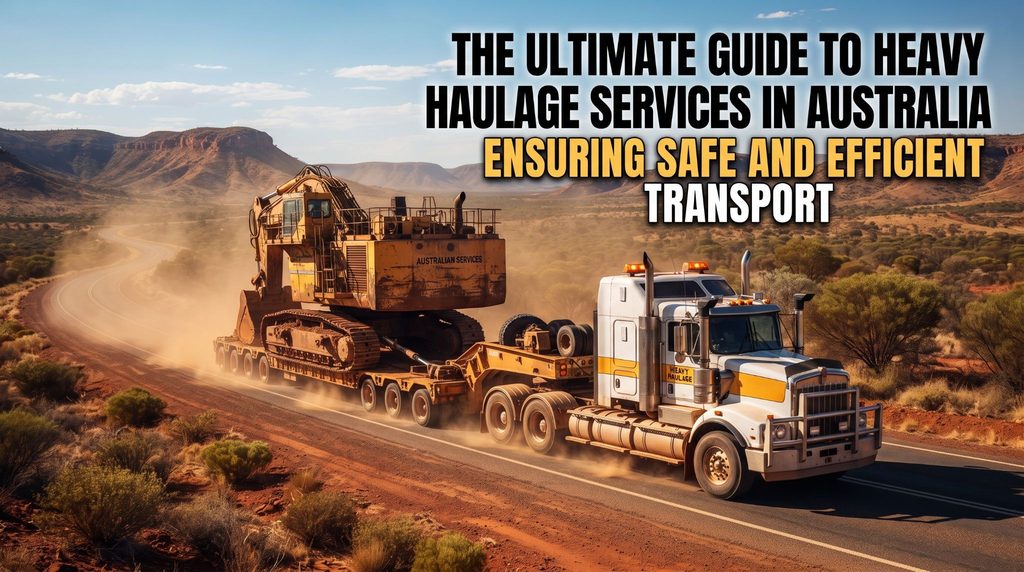
Heavy transport plays a crucial role in the infrastructure and industrial development of Australia. With vast distances and challenging terrains, specialised solutions are needed to move large or oversized loads safely and efficiently. This comprehensive guide covers the essentials of heavy haulage services, focusing particularly on the heavy haulage NT sector and its importance in enabling smooth logistics in the Northern Territory.
One key aspect of heavy haulage in this region is the necessity for expert knowledge and appropriate logistics planning. Companies offering heavy haulage NT services must ensure compliance with local regulations, safety standards, and environmental requirements to guarantee secure transportation of large goods.
Understanding Heavy Haulage
Heavy haulage refers to the movement of exceptionally large or heavy items that exceed standard legal limits for weight and dimensions on public roads. These items may include construction machinery, industrial equipment, agricultural vehicles, and prefabricated sections for infrastructure projects.
Such transport requires specialised equipment like multi-axle trailers, extendable flatbeds, low loaders, and often multiple support vehicles to accompany the load. The complexity of this work means that companies in the heavy haulage industry must invest substantially in technology and skilled operators.
Challenges in Heavy Haulage Operations
Transporting oversized loads involves many challenges. Firstly, there is the physical difficulty of manoeuvring large and heavy items through narrow roads, bridges, and challenging terrain. The Northern Territory, with its remote areas and varying road infrastructure, poses particular difficulties that experienced logistics specialists know how to manage.
Secondly, obtaining the correct permits is essential. Authorities must approve routes and schedules to minimise risk and disruption. These permits often require detailed planning and environmental assessments.
Another challenge is ensuring safety. The risk of accidents and damage increases with the size and weight of the load. Companies must adhere to rigorous safety protocols, including load securing, speed restrictions, and real-time monitoring.
Heavy Haulage in the Northern Territory
The Northern Territory’s sparse population and remote locations intensify the significance of reliable heavy haulage services. Industries such as mining, agriculture, defence, and construction depend heavily on the ability to move large equipment to and from sites efficiently.
Heavy haulage operators in the NT must be adept at handling limited infrastructure, unpredictable weather, and long distances between destinations. These factors demand careful planning and contingency measures to ensure timely deliveries and avoid costly downtime.
The specialised nature of heavy haulage there means that companies often offer end-to-end solutions—from route surveys and permit acquisition to transportation and unloading—providing clients with a seamless service.
Key Components of Heavy Haulage Services
Permits and Compliance
Legal compliance is foundational. Heavy haulage firms must secure all relevant permits before moving loads exceeding standard dimensions. These permits stipulate legal weight limits, approved routes, travel times, and escort requirements.
In the Northern Territory, regulations can vary in comparison to other Australian states, making local expertise indispensable. Without proper permits, transport can be delayed, fined, or stopped, causing unnecessary disruption.
Specialised Equipment
The transport of heavy or oversized cargo necessitates specific equipment based on load requirements. Transport trailers may need to be extendable or capable of carrying multi-tonne weights safely.
Additionally, equipment such as hydraulic ramps, winches, and modular transport systems may be employed to facilitate loading, transport, and unloading processes efficiently and safely.
Expertise and Experienced Personnel
Operators must have skills to handle complex manoeuvres in challenging conditions. Training in load securing, vehicle operation, risk assessment, and safety procedures is essential.
Experienced project managers oversee logistics to coordinate between clients, regulatory bodies, and drivers to keep operations on schedule and within legal boundaries.
Benefits of Utilising Professional Heavy Haulage Services
Engaging professional heavy haulage services offers many advantages. These include minimised risks of damage to cargo, infrastructure, or other road users through expert handling and compliance.
Efficient routing and scheduling reduce transit time and costs while providing peace of mind to clients that complex shipments will be delivered on time.
Moreover, professional companies maintain insurance coverage that protects clients against unforeseen incidents during transit, further safeguarding investments.
Environmental Considerations
Modern heavy haulage firms actively seek to reduce environmental impact. Through optimised route planning, use of fuel-efficient vehicles, and adherence to emissions regulations, they contribute to sustainable transport solutions.
In the Northern Territory, where ecosystems can be fragile, careful planning ensures minimal disturbance to natural habitats and cultural heritage sites.
Technological Innovations in Heavy Haulage
Technological advancements have transformed heavy haulage operations. GPS tracking, real-time load monitoring, and communication systems enhance safety and efficiency.
Some companies have invested in autonomous vehicle assistance and advanced suspension systems to improve load stability and reduce wear on roadways.
Future Trends in Heavy Haulage
As infrastructure projects expand across Australia, demand for heavy haulage services is expected to grow steadily. Innovations focusing on environmental sustainability and automation will likely become more prominent.
Furthermore, increasing regulatory scrutiny will encourage providers to maintain high standards of compliance and safety.
Choosing the Right Heavy Haulage Provider
Selecting a trusted provider requires assessment of a company’s experience, fleet capabilities, safety records, and client testimonials. Proven expertise in regional operations, such as in the Northern Territory, is particularly advantageous.
Companies that offer comprehensive services, including planning, permit handling, and escorted transport, can simplify otherwise complex logistics for clients.
Conclusion
Heavy haulage is an indispensable component of Australia’s development, particularly in remote regions like the Northern Territory. Through specialist equipment, skilled personnel, and meticulous planning, professional heavy haulage providers ensure that oversized and heavy loads are transported safely and efficiently.
The evolving landscape of regulations and technology continues to shape the industry, making it more reliable and environmentally conscious. Engaging experienced operators ensures that projects stay on track while reducing risk and environmental impact.
For businesses requiring heavy transport services, especially in the challenging conditions of the Northern Territory, seeking expert heavy haulage NT providers remains the optimal solution for timely, safe, and compliant deliveries.
